

Electric Motors – Single Phase, Split Phase
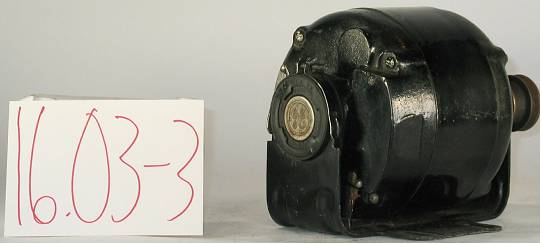
An early mid 20th century split phase, induction motor with sealed [now pierced] bearings, built for the then rapidly expanding home appliance industry in post WW2 Canada, used on an early cloths drier, it is equipped a twin belt, single piece pulley, part of a drive technology of the period developed by Kenmore and sold by the Robert Simpson Co. one of Canada’s historic department stores of note. GE, Circa 1955.
Features:
Equipped with an early version of so called “sealed bearings”, which were promoted as life time bearing requiring no oiling
Equipped a twin belt, single piece pulley, part of a drive technology of the period developed by Kenmore
Technical Significance:
Defines the engineering design idiom for split-phase, motor technology employed throughout the middle years of the 20th century, moving through the mature years of this genre towards the end of the century, when a new genre would progressively emerge, smaller, lighter and more energy efficient.
Marked an early attempt by manufacturers to produce a motor with “lifetime” sealed bearings requiring no oiling in the normal course of a lifetime of use. In fact electro-motorized appliance were becoming increasingly compacted, enclosed in high style cabinets which made service all but impossible, except by the trained appliance repair worker. As a result the sealed cap on the bearing became as much a recognition of the fact that the motor would never get oiled, then a marker of any special provisions made for prolonged bearing life. Whether motors made for such applications were equipped with oil caps or not was irrelevant. It would be several decades before a truly lifetime sealed, sleeve bearing would appear on the consumer appliance market.
Representative of a period of increasing innovation in the development of electro- motor enabled, home appliance technology, it is equipped with a twin belt, single piece pulley, part of a cloths drier drive technology for the period developed by Kenmore and sold by the Robert Simpson Co., one of Canada’s historic department stores of note. GE, Circa 1955.
Industrial Significance:
A marker of split phase electric motor production in Canada and the US, in the latter years of the 20th century. Manufactured in the hundreds of thousands, by GE and other manufacturers, it stands as an icon of its times, marking the first great period mass production and marketing of electric, motorized household appliances, now made possible by wide spread home electrification.