

Pressure Atomizing Oil Burner Equipment and Systems – Room Temperature Thermostats
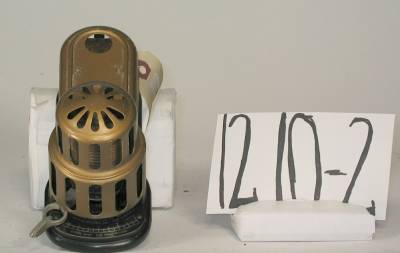
An early, automatic room temperature control device, using an hydraulic bellows, temperature sensor, with open contact, line voltage switching. Temperature control devices of this genre, would introduce automation into the Canadian household, set new standards of winter comfort and convenience for Canadians, and in so doing become markers of profound social and cultural change; Type A, Penn, Circa 1930.
Technical Significance:
* The competing thermostat technologies of the day were helical bimetal spring [See ID 215] and hydraulic bellows designs, shown here.
* Much larger and much less finely sculptured than its Time-O-Stat counterpart [See ID#215], without the sales appeal, it appears to be targeted on a different market segment.
* While similar in many ways to the engineering and construction of the Mercoid thermostat [See ID #213], the Pen model employed open contact switching, a break with much of the practice of the field in this period.
* Requiring a robust contact structure, capable of handling motor starting current, would make the device much less responsive to temperature changes than later developments would allow, see for example #ID 217 and 220
Industrial Significance:
* Penn’s concept of what a room thermostat should look like, in order to please the tastes of the well-to-do marketplace appears well behind those of their competitor, Time-O-Stat [See ID # 215]. It could well have been the company’s initial foray into the residential, room thermostat market, where it would find that appearance was everything.
* Pen Electric, much like the Mercoid Company, came into the market with a hydraulic bellows, actuated room thermostat, hoping to capture a portion of the then rapidly expanding, household, automatic, oil heating business. But even in the early 1930 the automatic heating industry was entering an increasingly competitive market, although it likely appeared at the time to be almost unlimited.
* The competing thermostat designs of the 1920’s and early 30’s [See ID #213, 214, 215] amply demonstrate the immense inventiveness of the period in which a range of technologies were being experimented with for automating home heating systems.
* Simple devices, by 21st century standards, they were non-the-less products of great engineering ingenuity for their times. They required materials and manufacturing techniques and expertise, which challenged the best engineering minds of the day.